Our Powerful Peregrines Feat. Sean McCormack
Peregrine Falcons are the fastest animals on the PLANET.

Answers from last week! For question one, the correct answer was A. There are twelve species of Oystercatcher across the world!
The other statements are FALSE. Females have longer bills, the Eurasian Oystercatcher sadly IS a species of conservation concern (on the amber list), and females do participate in courtship displays!
Now for my bonus question: According to a BTO paper, what percentage of Eurasian Oystercatchers survive to at least one year of age? The answer is approximately 50%!
This is according to the below publication on the BTO Website: https://www.bto.org/sites/default/files/publications/van_de_pol_et_al._2014_international_wader_studies.pdf
***
It was a slightly dour Tuesday afternoon. Windier than one might expect in Spring, if you don’t live in the UK. I had everything I needed for the day – camera, binoculars, passion. I pulled down the legs of my tripod as I exited the carpark, to be greeted, almost immediately, by the Surrey church I was here to scan for signs of apex life.
I had seen one of these birds of prey here before, only, at the time, my video camera didn’t have the best of zooms. I wanted to take a proper photo, get a better clip, of the bird that made such brilliant use of the ridges and ledges of this old, revered building. I wanted a unique glimpse into just one small moment of this bird’s life.
‘What are you getting, the falcons?’ an older lady asked me.
Another older woman I had encountered moments previously thought I had been looking at the scattering of Pigeons staggered across the ledges, so it was nice to know that at least one of the locals knew that they had an awe-inspiring bird of prey right on their community centre’s doorstep.
I was being conspicuous with my big old camera and tripod, but that last comment helped me to feel more confident in standing my ground. The bird species I was here to find is always, and I mean always worth stopping for, regardless of whether you’d consider yourself a birder or not.
This is the fastest animal in the world whilst stooping. They are mighty raptors that have set talon on and laid claim to a great many of our churches, monasteries and hospital buildings across the UK. They are fierce hunters. They are (usually) gentle parents. This bird needs no introduction, but boy, does it deserve many. It is, of course, the Peregrine Falcon.
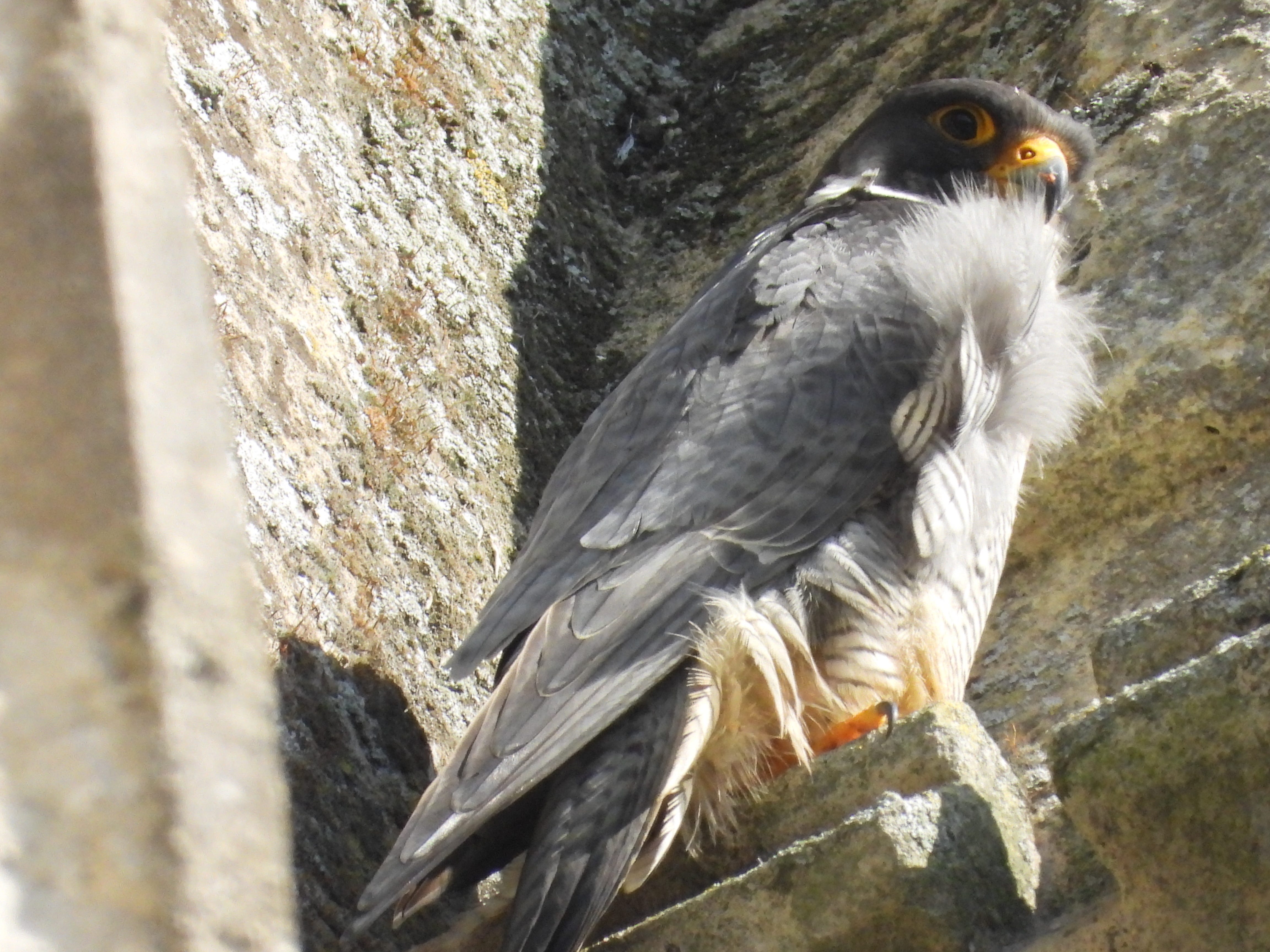
This was the bird I had come to see. And, after about ten minutes, I did spot one – a male, tucked into a corner at the very top of the church, just at the base of the spire. For most of that first hour, desperately trying to capture a little footage, his face was blocked by the ruffling of a few of his feathers in the wind. I tried shifting left and right to get more of his face, but not much seemed to help. And my tripod was not able to accommodate how bloomin’ high up he was!
EVENTUALLY, he shifted, giving me a better look at his profile. He began gently preening himself, like a blushing schoolgirl with a crush on the popular jock in class. If it weren’t for the speck of flesh on his sharp, hooked beak, I could easily have been fooled into thinking this apex predator wouldn’t harm a fly…


But they would. Not flies, typically, but other birds for the most part – they love a plump Pigeon. They stoop after their prey at incredible speeds of up to 200 miles per hour (allegedly – more on that later), earning them that impressive, shiny title of the world’s fastest bird.
When it comes to their biology, females are approximately 30% bigger than their male counterparts. The Peregrine I saw – above – is a male, so is nowhere near as large as this species can get! The ranges in weight and wingspan – from 600 to 1300g and from 95 to 115cm, according to the RSPB – is indicative of this sex-based difference.
In the UK at least, Peregrine Falcons live for an average of six years, but, according to the Hawk and Owl Trust, the oldest wild bird found on record lived to the ripe old age of nearly 22!
Peregrines usually lay either three or four eggs every year, and have taken to nesting on the tall buildings of urban areas, which mimic their natural nesting nurseries on clifftops.
Male incubation periods vary based on the interest of individuals – some are happy to partake in this duty, others less so. From one live camera in Australia, I witnessed a male very much not want to hand the role back over to the female when she returned from her break. Eventually, he would hop off the nest, but only reluctantly and/or after she’d been screaming at him to pluck off for several minutes.
It is this variation of behaviour between individual birds, especially Peregrines, that I find so fascinating.
Whilst they’re all over our cities today, Peregrines, like Red Kites, were once persecuted, intensively so. For Peregrines, a lot of their decline in the 1960s came down to the use of pesticides, which would thin the shells of their eggs through the effects of the food chain – the chemicals passed down from their herbivorous and insectivorous prey species.
Now for some nourishing notes. Here are some of the vocalisations of these silver scythes of the sky:
Credit goes to my guest of this week’s newsletter, Sean McCormack, for the audio! Towards the end of the (slightly shortened) recording you’ll hear the ‘chupping’ noises a pair of Peregrines typically make whilst bonding with each other.
***
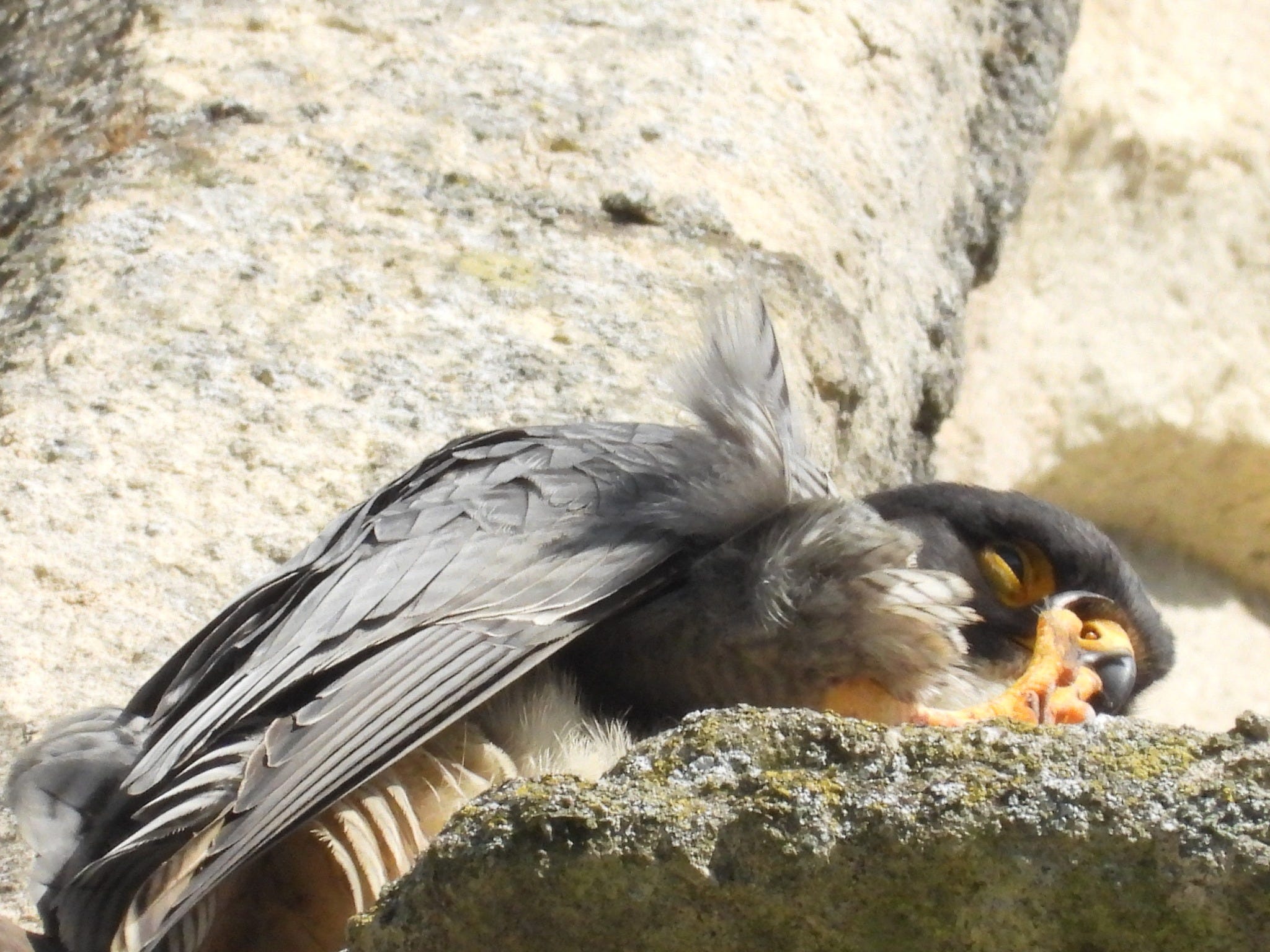
So. Before we move onto some recent Peregrine news, and after that, onto this biweek’s podcast, here’s a clip of my pal maintaining the quality of his feathers. All birds do this to clean, realign and maintain the quality of their feathers. For these apex predators in particular, the condition of their flight feathers is incredibly important.
Now for some interesting news!
Whilst it is not unheard of for Peregrines to lay five eggs in a clutch, it is uncommon. However, this year, the pair of Peregrines in Woking, monitored by the Woking Peregrine Project, have produced just this number. Whilst this news is positive on the face of it, if all five hatch, the demands of that extra beak may make things a little more difficult for the parents.
But we shall see how it all unfolds. Make sure you’re following the project by watching the live camera on their website.
***
To rope in another voice to talk more about this special, special bird, I had a chat with vet, ecologist, wildlife expert, writer and incredibly generous human being, Sean McCormack, founder and chair of Ealing Wildlife Group, and project leader for the Ealing Beavers! Enjoy :)
Did you learn lots from our chat? Are you interested to learn more about Sean’s work? You can follow him (@thatvetsean) on Instagram here!
*Small note – when I say Peregrines are found on every continent, I did mean to add except for Antarctica! 👆
Below are some pictures of Dusty and Freddie from atop Ealing Hospital! Credit goes to Sean and the rest of the Ealing Wildlife Group for the below photos.


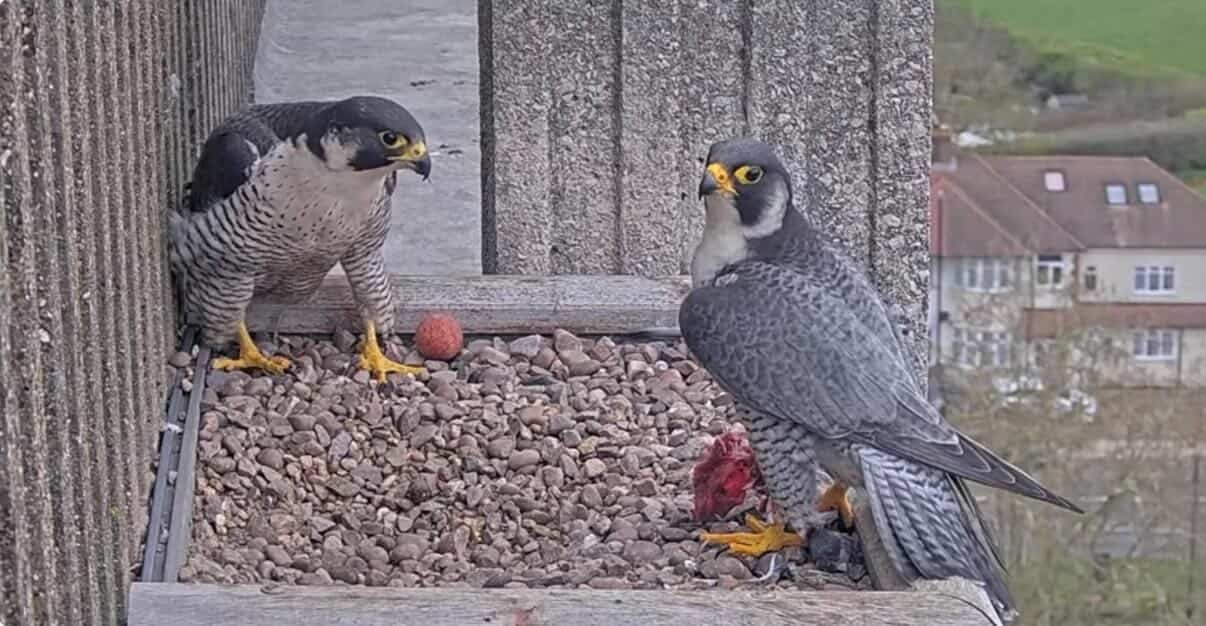
Learn more about Ealing Wildlife Group by clicking here, and more about Freddie and Dusty by following this link.
If you love other wildlife – although I agree, birds are best – do take a look at the work of the Ealing Beaver Project, and consider booking on to a guided tour or safari!
Fancy seeing what Dusty and Freddie (and their newly hatched chicks, at time of publication) are up to? Watch them live here! 👇
Finally, to wrap up, I have some Peregrine questions for you!
Multiple choice – which two facts are correct?
A. Male Peregrines are called Tiercels
B. Peregrines have been known to kill other birds of prey, including Buzzards!
C. Peregrines will eat vegetation if in need
D. Sibling rivalry is strong and common in Peregrine chicksa. True or false – Peregrines can spot their prey from a distance of more than three kilometres away
b. And, finally – How many times stronger is a Peregrine’s eyesight than our own?
Time for me to go. But as I do, I’ll leave you on yet another meme:
Learn more:
1. https://www.rspb.org.uk/birds-and-wildlife/peregrine-falcon
2. https://www.bto.org/learn/about-birds/birdfacts/peregrine
3. https://www.hertswildlifetrust.org.uk/blog/peregrine-falcon-faqs
4. https://www.hawkandowltrust.org/learn-and-discover/about-birds-of-prey/peregrine
5. https://www.howitworksdaily.com/the-peregrine-falcon-inspired-aircraft/
6. https://www.raptoraid.com/conservation-2/rodenticides-amp-pesticides
7. https://www.discoverwildlife.com/animal-facts/birds/peregrine-falcon-facts
Well done Amy on this wonderful podcast series. I love these - a great conversation with Sean on the Peregrine - just listening to them in the sky outside now too! They approve :-)